
You've decided to learn piano. Or violin. Or voice. You've searched for piano coaching near me, violin home tutors near me, and music singing classes near me. You've looked at top music schools and music engineering schools near me for the serious track. But here's what is important to know: not all music teachers use the same teaching approach or offer the same level of experience. Some may emphasize proper technique, while others may use a less structured approach. Lesson costs also vary considerably, and digital learning tools may be useful for some students depending on their goals.
This guide isn't a generic "music lessons are great" article. Instead, we'll show you 7 signs that a music teacher or lesson program may not be a good fit, how to evaluate a qualified instructor for different instruments, and when a music school may be worth considering compared with private tutoring.
Part 1: The 7 Warning Signs You're Not Getting the Right Fit From a Music Teacher
You're paying for lessons. Here's how to evaluate whether the instruction is providing the structure, feedback, and support you are looking for.
Warning Sign #1: They don't ask about your goals
A good teacher should usually ask: What do you want to play? Classical? Jazz? Pop? Do you want to play for fun or prepare for auditions? If the same lesson plan is used for every student regardless of goals and ability, the teaching approach may not be a good fit for you.
Warning Sign #2: They never play for you
A qualified teacher may demonstrate technique when it is useful for the lesson. If they only tell you what to do without showing examples, you may want to ask how they normally demonstrate posture, hand position, tone production, or other techniques.
Warning Sign #3: They give little attention to technique
You're learning "Für Elise" but your wrists are collapsed, your shoulders are tense, and your fingers are flat. A teacher should provide appropriate technique feedback and explain how to make adjustments. If technical issues are consistently ignored, ask how technique is incorporated into the lesson plan.
Warning Sign #4: They have no structure
No warm-ups, no scales, no sight-reading, no theory, and every lesson begins with "what do you want to play today?" Some students prefer a highly flexible approach, but if you want structured development, ask the teacher how lessons are planned and how skills are tracked over time.
Warning Sign #5: You never get homework
If you leave a lesson without clear assignments, it may be harder to know what to practice between lessons. A structured teacher may provide specific practice tasks, such as working on a scale, learning several measures, or correcting a particular hand position.
Warning Sign #6: They cancel frequently or show up unprepared
If your teacher frequently cancels at the last minute, arrives late, or spends significant lesson time looking for materials, ask about their scheduling and preparation practices. A clear cancellation policy and consistent preparation can make the learning experience easier to manage.
Warning Sign #7: You're not seeing the progress you expected
This is an important one. After several months of regular lessons and practice, you should review whether you're developing the skills you originally wanted to improve. Progress can look different for each student and depends on practice time, starting level, goals, and the teaching approach. If you feel your progress has stalled, discuss the issue with your teacher or consider trying a different approach.
Warning Sign Comparison
- No goal discussion: Ask whether the teacher can tailor lessons to your musical goals.
- Never demonstrates: Ask how examples and technique demonstrations are incorporated.
- Limited technique feedback: Ask how posture, hand position, and technique are addressed.
- No lesson structure: Ask for an explanation of the lesson plan and progression.
- No homework: Ask whether specific practice assignments can be provided.
- Cancels or seems unprepared: Review the teacher's scheduling and cancellation policy.
- Limited progress: Discuss goals and consider adjusting the teaching approach if needed.
Part 2: Piano Coaching Near Me – How to Find a Qualified Teacher
You've searched for piano coaching near me. Here's how to evaluate candidates.
Where to look:
- Music Teachers National Association (MTNA): A professional association that can be one source for finding or researching teachers. Availability and qualifications should be verified with the individual instructor.
- Local music stores: May offer or recommend beginner lessons.
- Universities: Some music students or faculty may offer private instruction.
- Referrals from other parents or students: Can provide firsthand information about a local teacher.
- Lesson platforms: Online lesson marketplaces may offer convenient ways to compare instructors and lesson formats.
Lesson prices vary by teacher, location, instrument, experience, lesson length, and format. Published price ranges should be treated as examples rather than guarantees of what a particular teacher will charge.
Questions to ask before hiring:
- "What is your teaching philosophy?" Do they focus on technique, repertoire, theory, or a combination?
- "What method books or materials do you use?" Ask how materials are selected for each student.
- "Do you teach sight-reading and theory?" This can be useful for students who want broader musicianship skills.
- "Can I observe a lesson?" Ask whether an observation or trial lesson is available.
- "What is your cancellation policy?" Make sure you understand notice periods, make-up lessons, and applicable fees.
Potential red flags in answers:
- "I don't use method books" — this is not automatically a problem, but ask how lessons are structured and what materials are used instead.
- "We'll just play whatever you want" — ask how the teacher balances student interests with skill development.
- "You don't need theory" — ask whether theory is incorporated if it is relevant to your goals.
- No clear policy on cancellations or make-up lessons.
Question Comparison
- Teaching philosophy: A clear explanation of how technique, repertoire, and other skills are balanced may be useful.
- Method books: The teacher should be able to explain which materials are used and why.
- Sight-reading/theory: Ask whether these skills are part of the lesson plan.
- Observe a lesson: Ask about trial or observation policies.
- Cancellation policy: Look for clear information about notice, make-up lessons, and fees.
Part 3: Violin Home Tutors Near Me – What's Different About Strings
Violin home tutors near me searches require different criteria than piano. Violin technique involves several physical skills that can take time to develop, so instructor feedback can be particularly useful for beginners.
Why violin teachers can be especially helpful:
- Posture is important, including violin hold, bow hold, and shoulder-rest positioning.
- Intonation and playing in tune require listening and ear-training skills.
- Bow technique influences tone production.
- Consistent feedback can help students identify and adjust developing habits.
What to look for in a violin teacher:
- Relevant training: Look for experience appropriate to your playing goals and level.
- Emphasis on posture: The teacher should provide feedback on violin position, bow hold, and related technique.
- Use of visual feedback: Mirrors or video can sometimes help students observe their playing position.
- Tuning assistance: Beginners may need guidance with tuning and should ask how the teacher handles instrument setup.
Violin teacher qualifications to consider:
- Professional performer with relevant teaching experience.
- Music education or performance degree.
- Advanced university music student.
- Experienced amateur with demonstrated teaching ability.
These categories are not a universal ranking of teacher quality. Teaching ability, experience, communication, specialization, and fit with the student's goals can all matter.
Typical rates:
- Rates for university student teachers may be lower in some markets.
- Experienced teachers may charge more depending on qualifications and location.
- Professional performers who also teach may have higher rates.
Credential Comparison
- University music major: May suit beginners or students looking for a lower-cost option, depending on experience.
- Music education or performance degree: May provide formal musical training and can be relevant for students seeking structured instruction.
- Professional performer: May be useful for advanced students or audition preparation when the teacher's experience matches the student's goals.
Part 4: Music Singing Classes Near Me – Vocal Lessons Are Different
Searching for music singing classes near me requires understanding that voice lessons differ from instrumental lessons.
How voice lessons differ:
- The vocal instrument involves physical processes that cannot be directly observed in the same way as a piano keyboard or violin.
- A good teacher should have appropriate knowledge of vocal technique and should be able to explain exercises clearly.
- Students should pay attention to physical discomfort, persistent hoarseness, or other unusual symptoms and seek appropriate professional advice when necessary.
- Group classes can be useful for some goals, while individual instruction may provide more personalized feedback.
What to look for in a voice teacher:
Relevant credentials and experience:
- Training or experience in vocal performance, pedagogy, or another relevant area.
- Understanding of vocal anatomy and concepts such as breath support, resonance, and vocal function.
- Ability to teach the musical styles that match your goals or a clear specialization in a particular style.
Potential red flags:
- "I don't believe in technique, just sing naturally" — ask how the teacher approaches vocal technique and healthy practice habits.
- No warm-up or preparation — ask how the teacher structures the beginning of a lesson.
- Difficulty explaining basic concepts — ask for clear explanations of the exercises being used.
- You consistently experience pain, strain, or persistent hoarseness after lessons — pause the activity and consider consulting an appropriate healthcare professional.
Typical voice lesson rates:
- Student teachers may offer lower rates depending on location and experience.
- Experienced teachers may charge more based on qualifications and specialization.
- Professional performers who teach may have higher rates.
Warm-up approach:
A voice teacher may include breathing exercises, lip trills, humming, gentle scales, or other exercises before more demanding singing. The appropriate warm-up varies according to the student's voice, experience, goals, and the teacher's approach.
Teacher Type Comparison
- Student teacher: May be suitable for beginners or students seeking a lower-cost option.
- Experienced teacher: May suit students looking for structured vocal development.
- Professional performer/teacher: May be useful for advanced training or audition preparation when the instructor's specialization matches the student's goals.
Part 5: Top Music Schools – Are They Worth the Investment?
You've looked at top music schools such as Juilliard, Berklee, Curtis, and Eastman. Whether a major music school is worth the investment depends on your goals, finances, preferred learning environment, admission options, and the value you place on the school's particular resources.
When a major music school may be worth considering:
- You want formal preparation for a professional music career.
- You value access to ensembles, faculty, facilities, performances, or alumni networks.
- You're pursuing a music education degree or another credential relevant to your goals.
- You prefer an intensive and structured learning environment.
When another option may make more sense:
- You want to play primarily for recreation.
- You are an adult learner who prefers flexible private instruction.
- The total tuition and living costs do not fit your budget.
- You do not need a formal music degree for your particular goals.
Alternatives to major music schools:
- Community college music programs: May provide lower-cost coursework or transfer opportunities, depending on the institution.
- State university music schools: May provide degree programs with costs that vary by residency and institution.
- Private lessons: Can focus directly on skill development without requiring a degree program.
- Online music programs: May provide flexible coursework, with accreditation and credential details varying by program.
For adult learners, private lessons can be a practical option when the primary goal is individual skill development, but the appropriate choice depends on the student's goals, schedule, budget, and preferred learning format.
Path Comparison
- Major music school: Degree-oriented study, intensive training, and access to institutional resources.
- State university: Degree programs with costs and resources that vary by institution.
- Community college: May provide introductory study, associate degrees, or transfer pathways.
- Private lessons: Individualized skill development without necessarily pursuing a degree.
Part 6: Music Engineering Schools Near Me – A Different Path
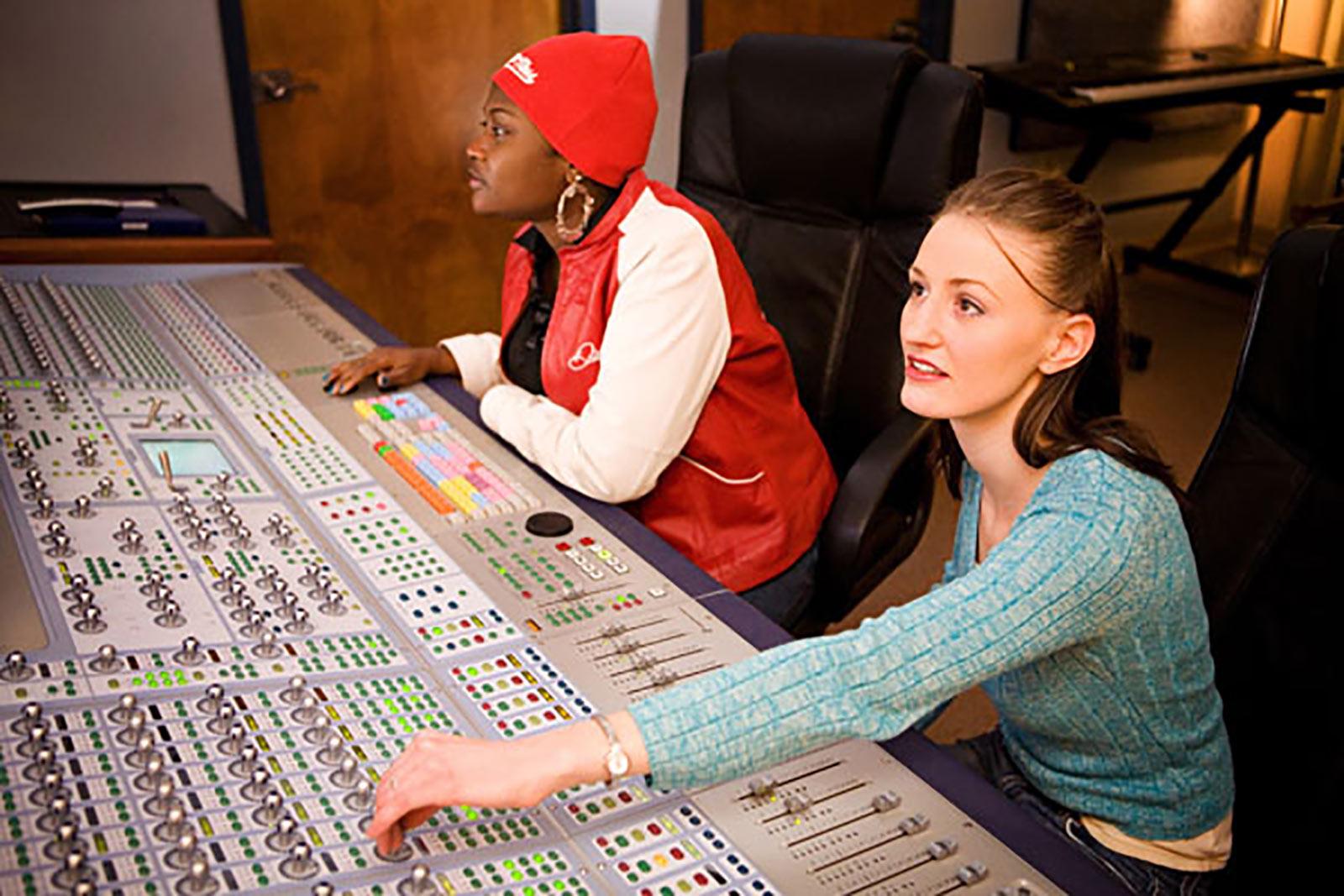
If you're searching for music engineering schools near me, you're interested in the technical side of music, such as recording, mixing, producing, and sound design.
What music engineering programs may teach:
- Recording techniques, microphone placement, and signal flow.
- Digital audio workstations such as Pro Tools, Logic, or Ableton.
- Mixing and mastering.
- Acoustics and sound design.
- Music business and copyright concepts.
Examples of music engineering and production programs to research:
- Berklee College of Music: Music production and engineering-related programs; current tuition and program length should be checked directly with the school.
- Middle Tennessee State University: Offers programs related to recording industry studies; current costs and requirements vary.
- University of Miami: Offers music technology-related study; current program details should be verified with the institution.
- NYU Steinhardt: Offers music technology-related programs; current tuition and requirements vary.
- Conservatory of Recording Arts and Sciences: Offers specialized recording-arts education; current program structure and cost should be verified directly.
Do you need a degree?
Not necessarily. Some people enter recording and audio work through apprenticeships, hands-on experience, online education, trade programs, or degree programs. The most useful path depends on the type of work you want to pursue and the employers or clients you want to work with.
Online alternatives:
- Berklee Online: Offers online music-related courses and programs; current pricing varies.
- Coursera: Offers music production and audio-related courses from different providers; pricing and access vary by course.
- LinkedIn Learning: Offers audio and music-production courses; current subscription terms vary.
Path Comparison
- University degree: Structured academic study, potential networking opportunities, and a formal credential.
- Trade school: More specialized training that may emphasize hands-on skills.
- Online certificate: Flexible study with program quality, recognition, and cost varying by provider.
- Apprenticeship: Hands-on experience that may or may not be paid, depending on the arrangement.
Part 7: Group Classes vs Private Lessons – Which Is Right for You?
When you search for music singing classes near me, you'll find both group classes and private lessons. The better choice depends on your goals, budget, age, learning preferences, and desired level of individual feedback.
Group classes:
- Cost: Often lower per student than private instruction, although prices vary.
- May suit: Beginners, social learners, young children, or students with a limited budget.
- Potential benefits: Social interaction and opportunities to learn by observing other students.
- Potential limitation: Less individual attention during a given class.
Private lessons:
- Cost: Usually higher than group instruction, although rates vary widely.
- May suit: Students with specific goals or those seeking individualized feedback.
- Potential benefits: Lessons can be tailored to the student's level and goals.
- Potential limitation: Higher cost and greater need for individual practice between lessons.
For children: Group classes can work well for some young learners because they provide social interaction, while private instruction may be useful when a child needs more individualized attention.
For adults: Both group and private lessons can work. Adults should consider their goals, available practice time, budget, and preferred learning environment rather than assuming one format is always better.
Factor Comparison
- Cost: Group classes are often less expensive per student; private lessons generally cost more.
- Individual attention: Usually greater in private lessons.
- Progress: Depends on the student's practice, goals, teacher, and learning environment.
- Best fit: Varies between beginners, children, adults, and students with specialized goals.
- Social aspect: Generally greater in group classes.
Part 8: Online Music Lessons – Do They Work?
Online music lessons are now widely available. Whether they work well depends on the instrument, student's level, teaching approach, equipment, and type of instruction.
When online lessons may work well:
- Theory, ear training, music history, and other subjects that do not require physical adjustment.
- Intermediate or advanced students who already have established basic technique.
- Adults who are comfortable practicing independently.
- Teachers who have experience with online instruction and appropriate camera and audio setups.
When in-person instruction may be preferable:
- Absolute beginners who need frequent physical and visual technique feedback.
- Young children who benefit from direct in-person engagement.
- Students working on subtle violin or vocal technique that can be difficult to observe through a camera.
- Students whose internet connection or equipment makes online instruction difficult.
Tech requirements for online lessons:
- A camera positioned so the teacher can see the relevant playing technique.
- A microphone that provides sufficiently clear sound.
- A stable internet connection.
- Compatible software such as Zoom, FaceTime, or another platform selected by the teacher.
Hybrid approach:
Some teachers offer a combination of in-person and online lessons. This may allow students to receive direct technique feedback while using online sessions for theory, repertoire, or other suitable activities.
Student Type Comparison
- Absolute beginner: Online lessons may require more careful camera positioning and feedback.
- Intermediate piano student: Online lessons may work well for some students with appropriate equipment.
- Advanced violin student: Online coaching may be useful for interpretation or repertoire, depending on the student's technique.
- Young child: In-person lessons may provide more direct engagement for some children.
- Adult beginner: Online or in-person lessons may both be viable depending on the instrument and student.
- Voice student: Online lessons can be an option, although audio and visual limitations should be considered.
Part 9: Frequently Asked Questions About Music Lessons
How much do music lessons cost?
Music lesson prices vary significantly by teacher, instrument, location, lesson length, qualifications, and format. Published ranges should be treated as examples rather than universal rates. Check the current price directly with the teacher or school.
How often should I take lessons?
Weekly lessons are common, but some beginners may prefer every-other-week instruction, while advanced students preparing for auditions may choose more frequent sessions. The appropriate schedule depends on goals and practice time.
How long until I see progress?
Progress varies based on practice habits, starting level, instrument, teacher, and goals. Some beginners may learn simple pieces within several months, while developing broader musicianship skills can take considerably longer.
Can adults learn an instrument?
Yes. Adults can learn musical instruments at different ages and skill levels. Learning pace varies from person to person, and adults may have different practice schedules and learning goals than children.
What instrument is easiest to learn as an adult?
There is no single easiest instrument for every adult. Guitar, ukulele, piano, and other instruments may appeal to different learners for different reasons. Violin can require substantial work on posture, intonation, and bow technique, but individual learning experiences vary.
Do I need to read music?
It depends on your musical goals and style. Classical and some jazz programs may place greater emphasis on notation, while rock, pop, folk, and other styles may also use ear training, chord charts, or tablature.
Should I buy an instrument before starting lessons?
Not necessarily. Renting can be a practical way to try an instrument before making a larger purchase, particularly for instruments such as violins, cellos, and band instruments. If you plan to buy, consider asking a qualified teacher or experienced player for guidance on suitable instruments at your budget.
Part 10: Your Action Plan – Finding the Right Music Teacher
Step 1 – Define your goals
- Play for fun: Consider private lessons, group classes, or online instruction.
- Prepare for auditions: Consider a specialist teacher or a formal music program that matches your goals.
- Learn the basics: Compare group classes, private lessons, and online courses.
- Recording or mixing: Research music engineering schools, trade programs, and hands-on learning options.
Step 2 – Research teachers
- Search piano coaching near me, violin home tutors near me, or music singing classes near me.
- Research professional teacher associations such as MTNA and verify individual instructor qualifications.
- Read reviews while also considering the source, date, and consistency of the feedback.
Step 3 – Contact several teachers
- Ask the questions from Part 2.
- Request information about trial lessons and their pricing.
- Ask about cancellation policies, lesson location, online options, and scheduling.
Step 4 – Take trial lessons
- Pay attention to the warning signs in Part 1.
- Ask whether the teacher provides useful technique feedback.
- Consider whether the lesson has a clear structure.
- Evaluate whether the teacher's communication style fits your learning preferences.
Step 5 – Choose and commit
- Choose the teacher whose qualifications, teaching approach, availability, and communication style fit your goals.
- Schedule lessons at a consistent time if possible.
- Set a reasonable review period and reassess your progress, costs, and satisfaction before continuing long term.
Note: Music lesson prices, teacher qualifications, school tuition, program availability, and course formats vary by location and provider. Examples in this guide are for comparison purposes and should not be treated as guaranteed prices, outcomes, or endorsements. Verify current details directly with the teacher or institution before enrolling or paying for lessons.

