
When the air conditioner stops working in the middle of a heat wave, the first search is often “cheap AC repair near me.” Low prices matter — but so do licensing, clear diagnostics, and avoiding unnecessary add-ons. Paying the lowest visit fee is not always the same as paying the lowest total bill.
This guide explains typical U.S. repair cost ranges, practical ways to reduce what you spend, and how to tell a fair quote from a risky one. It is for general information only and is not a service offer or guarantee of price.
What AC Repair Usually Costs
National ranges for residential central air service in 2026 commonly look like this:
- Diagnostic / service call: about $75–$200 on a standard weekday (average often near $125–$150)
- After-hours or weekend visit: often $150–$350 before any repair
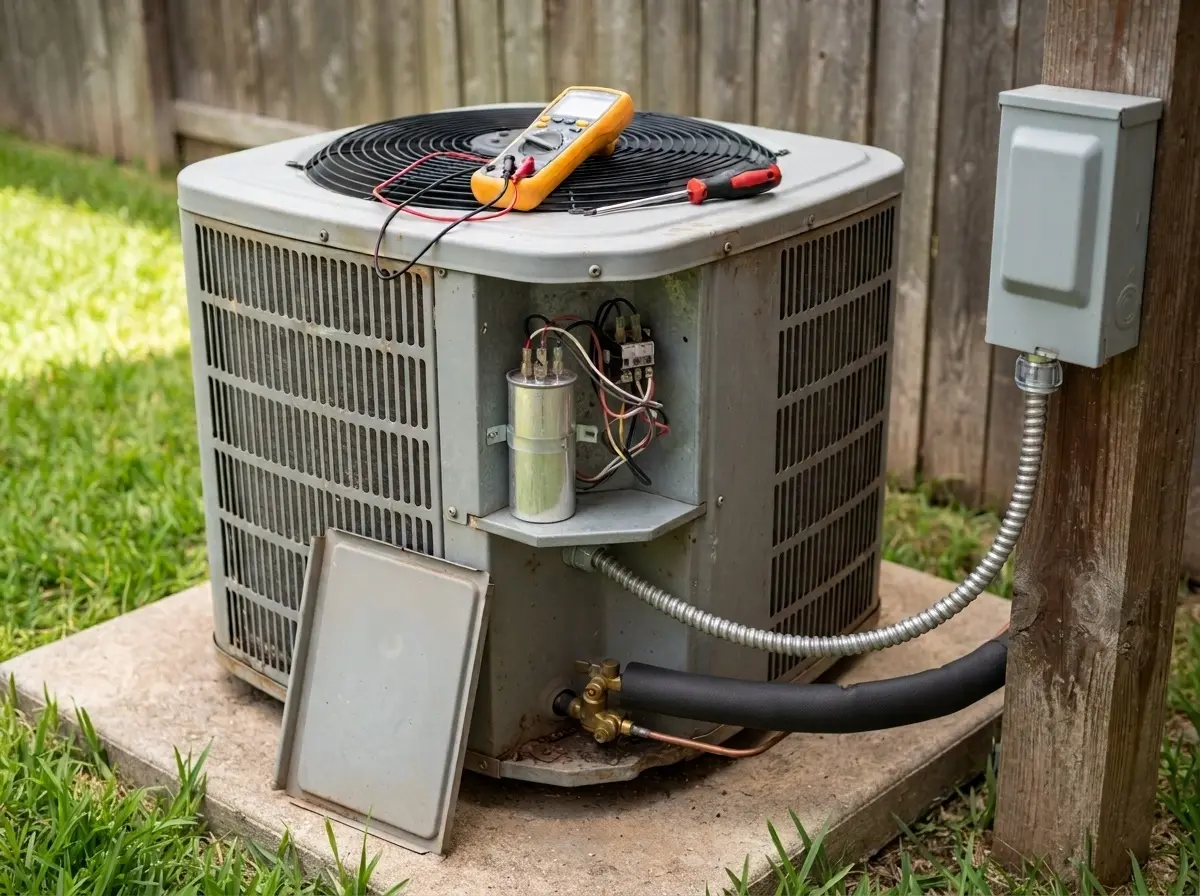
- Common small repairs (capacitor, contactor, simple drain issues): roughly $150–$450 installed
- Typical mid-range repair total: about $350–$650 for many straightforward jobs
- Refrigerant leak work and recharge: often $200–$1,500 depending on leak location and refrigerant type
- Major component work (compressor, coil, large motor): frequently $600–$2,500+
Prices vary by city, system age, access to equipment, and whether the visit is urgent. Rural areas may run lower on labor but higher on travel; high-cost metro markets often sit above the national midrange.
These figures are approximate market ranges, not fixed prices. Always get a written estimate for your specific system.
Ways to Keep the Bill Lower Without Cutting Corners
Several practical steps tend to reduce cost more reliably than chasing the cheapest ad:
- Schedule before peak heat when possible — emergency and after-hours calls usually cost more than weekday appointments.
- Ask whether the diagnostic fee is credited toward the repair if you approve the work.
- Request an itemized estimate that separates diagnosis, labor, parts, and optional extras.
- Compare complete quotes for the same repair, not only the trip fee — especially for jobs over about $500.
- Confirm licensing and insurance where your state requires them, and ask about parts and labor warranty in writing.
- Do simple prep yourself — replace a dirty filter, clear debris around the outdoor unit, and note the exact symptoms and model number before the technician arrives.
The lowest advertised service-call price is not always the lowest final invoice. Scope, parts quality, and warranty matter as much as the dispatch fee.
Red Flags When Shopping for “Cheap” AC Repair
Be cautious if a company:
- Refuses to put the diagnosis and price in writing.
- Pushes major replacements without explaining why a smaller repair will not work.
- Asks for large upfront payment before any diagnosis.
- Cannot show basic licensing or insurance where required.
- Quotes a very low visit fee but adds high pressure for unrelated upgrades on the spot.
A Simple Process That Usually Works
- Describe the problem clearly — when it started, what you hear or see, and the system age or model if known.
- Get at least two quotes for non-emergency repairs above a few hundred dollars.
- Ask the same questions of each company — diagnostic fee credit, itemized parts and labor, warranty length, and expected timeline.
- Approve only the work tied to the diagnosed issue unless you specifically want additional service.
- Keep the invoice and warranty details after the job is finished.
Frequently Asked Questions
Is a cheap diagnostic fee always a good deal?
Not by itself. Some low visit fees are offset by higher parts markups or extra recommended work. Compare the full repair total and warranty.
Should I always repair instead of replace?
Repair often makes sense for younger systems with a single failed part. Replacement may be more practical when the unit is older, has repeated failures, uses hard-to-source refrigerant, or needs major components such as a compressor or coil. Ask for a clear repair-vs-replace comparison in writing.
Can I fix it myself to save money?
Homeowners can safely change filters and keep the outdoor unit clear of debris. Electrical panels, refrigerant, and sealed-system work should be left to qualified technicians for safety and code reasons.
How do I find a reliable local option?
Look for licensed HVAC contractors (where licensing applies), recent local reviews, and clear written estimates. Verify that the person who visits is covered by the company’s insurance.
Finding more affordable AC repair near you usually comes down to timing, clear scope, itemized quotes, and choosing a properly credentialed contractor — not only the lowest number in an ad. A few careful questions before work starts can prevent a small problem from turning into an unexpectedly large bill.

